
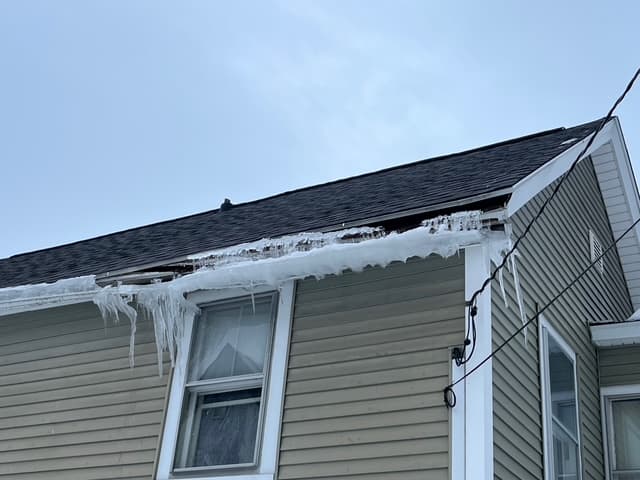
Ice Dam Damage Repair After Vermont's Spring Thaw
Every April, the same thing happens across Lamoille County. The snowpack starts pulling back, the days get longer, and homeowners walk outside to get the mail and stop dead in their tracks. There it is — a waterline stain creeping down the siding, a patch of shingles that looks wrong, or worse, a soffit that's sagging where it wasn't before. Winter did its work quietly, and now spring is presenting the bill.
Ice dams are one of the most misunderstood and underestimated sources of home damage in Vermont. People tend to think of them as a nuisance — something to knock off the eaves with a roof rake — rather than a slow-moving structural threat. But after a winter like the one Stowe and the surrounding hills just came through, with multiple freeze-thaw cycles stacking on top of heavy snowfall, the damage showing up this spring is real, and in some cases, it's significant.
This post is meant to help you understand what you're looking at, how to think through the scope of damage, and what should happen before you call anyone to fix it.
How Ice Dams Actually Form — and Why It Matters for Repairs
Understanding the mechanism helps you understand the damage pattern, which helps you ask better questions when you're talking to a contractor.
Ice dams form when heat escaping through your roof — from living space below, inadequate insulation, or air leaks — warms the upper roof deck enough to melt the underside of the snowpack. That meltwater runs down the roof slope until it hits the cold eave overhang, where there's no heat underneath it, and refreezes. Over time, that ice buildup creates a dam. Water pools behind it. And standing water on a roof will find any weakness — a nail hole, a worn seam, a flashing gap — and work its way in.
The critical point here is that the ice dam itself isn't always where the damage happens. The damage happens several feet up-slope, behind the dam, where water was sitting against your roof deck for days or weeks. That's the area to inspect carefully.
What to Look For This Spring
On the Roof
Start with the eaves and the first few feet of roof surface above them. Look for shingles that are lifting, cracked, or showing granule loss concentrated in one area. Asphalt shingles that have been repeatedly soaked and refrozen lose their flexibility and become brittle. They may look intact from the ground but fail under the next rain.
Check your flashing — around chimneys, dormers, skylights, and valleys. These are the high-risk zones. Flashing that was already marginal going into winter may have shifted or pulled away from the seal. Water doesn't need much of a gap.
If you have a lower-pitch section of roof, a porch roof, or a shed dormer — common in older Vermont farmhouses and the kind of chalets you see throughout the Stowe area — those sections are disproportionately vulnerable. Low slopes collect standing water more readily and are harder to detail correctly.
In the Attic
Before you call a roofer, go up in your attic if it's accessible. Take a flashlight. You're looking for staining on the sheathing, soft spots, any daylight coming through where it shouldn't be, and insulation that's wet or compressed. Wet insulation loses most of its R-value and can take a very long time to dry out if it's not addressed. If you see dark staining on the rafters or sheathing, that's a sign water has been getting in — possibly for more than one season.
Also note whether your attic ventilation looks intact. Soffit vents that were blocked by ice or debris through the winter can contribute to the heat buildup that causes ice dams in the first place.
On the Siding and Walls
April is the right time to walk the perimeter of your house carefully and look at the siding. Ice dam water that gets under the roof covering doesn't always stay in the attic — it can migrate down into wall cavities. Look for:
- Paint bubbling or peeling, especially near eaves and upper courses of siding
- Siding boards that are warped, cupped, or pulling away from the wall
- Discoloration or staining that wasn't there last fall
- Soft spots when you press on wood siding — that's rot beginning
- Gaps opening up at joints or around window and door trim
Fiber cement, vinyl, and wood siding all respond differently to moisture intrusion, but none of them are immune. In older homes with wooden clapboards — which you'll find throughout the villages and on older properties across Lamoille County — moisture infiltration can accelerate rot in ways that aren't visible from the surface until the damage is already deep.
The Hidden Cost of Waiting
Here's the practical reality: damage that's caught in April is almost always cheaper to fix than damage caught in July. A few compromised shingles and a small section of wet sheathing is a manageable repair. Leave it through a rainy spring and a hot summer and you're looking at mold remediation, structural sheathing replacement, and potentially interior damage on top of the exterior repairs.
The same logic applies to siding. A warped board or two is a straightforward replacement. A wall cavity that's been wet for two seasons is a different conversation entirely.
Spring is also when most reputable contractors are booking up fast. In a place like Stowe, where there's a significant base of second homes and investment properties that all need attention at the same time, waiting until June or July to call someone often means waiting until August or September to get the work done.
Addressing the Root Cause, Not Just the Symptoms
Replacing damaged shingles without addressing why ice dams formed is a short-term fix. If your attic has insufficient insulation, air bypasses around recessed lights or plumbing chases, or inadequate ventilation, you'll likely be dealing with the same problem next winter.
A thorough repair approach should include:
- Proper ice and water shield installation at the eaves. Vermont's building code requires a minimum coverage, but in higher-elevation or north-facing exposures, more coverage is often warranted. Ice and water shield is a self-adhering membrane that seals around fasteners and prevents water infiltration even when ice backs up behind a dam.
- Attic air sealing before adding insulation. Adding insulation over air leaks is like putting a blanket over an open window — it helps a little but doesn't fix the real problem.
- Balanced attic ventilation — intake at the soffits, exhaust at the ridge. When this system works correctly, the attic stays cold in winter, which eliminates the temperature differential that causes melting and refreezing.
A contractor who only talks about what they're replacing, without asking about your insulation and ventilation, is leaving part of the problem unsolved.
Spring Is Also Siding Season
If you've been thinking about siding replacement or upgrades, spring is the right time to start that conversation. April through October is the productive installation window in Vermont — temperatures are above freezing, the substrate is dry, and you've got time for the work to be done and inspected before cold weather returns.
If your inspection reveals sections of damaged siding from this winter, it's worth evaluating whether a targeted repair makes sense or whether it's a signal that the whole envelope needs attention. Siding that's 20-plus years old, already showing wear in multiple areas, and has now had a moisture event is often a better candidate for full replacement than repeated patching.
Modern fiber cement siding, in particular, has come a long way in terms of both performance and aesthetics. It handles Vermont's freeze-thaw cycles well, holds paint longer than wood, and doesn't give insects the foothold that wood products sometimes do. That said, installation quality matters enormously — proper flashing, appropriate fastening patterns, and correct clearances from grade and roofing materials are what determine how long it performs.
Getting a Proper Assessment
Before you start calling contractors for quotes, take your own notes first. Photograph anything that looks wrong — from the ground is fine — and write down what you observed in the attic. Note which sides of the house seem most affected and whether you had visible ice dams this winter or water staining on interior ceilings. That information helps a contractor give you a more accurate assessment rather than a wide estimate that covers every possibility.
Ask any contractor you talk to whether their estimate includes the full scope of damage — substrate, underlayment, and flashing — not just the visible surface materials. Ask whether they're licensed and insured in Vermont. And ask whether they'll address the underlying causes of ice damming or just the resulting damage.
If you're in the Stowe area or anywhere across Lamoille County and want a professional eye on what this winter left behind, All-Star Contracting is a licensed Vermont roofing and siding contractor serving the whole state. We're currently scheduling spring assessments and repairs. You can reach us at (802) 305-8151 or visit allstarcontracting.pro to learn more about what we do.
The work doesn't get easier by waiting. April is the right time to look at it honestly.
Frequently Asked Questions
How do I know if my roof was actually damaged by ice dams this winter?
The most reliable signs are water staining on interior ceilings or walls, staining or soft spots on attic sheathing, lifted or cracked shingles near the eaves, and paint peeling on siding close to the roofline. Ice dams don't always cause immediate visible leaks — water can sit in wall cavities or saturate insulation without showing up inside right away. A roof inspection in April, before the heavy spring rains arrive, is the best way to catch damage before it compounds.
Can I just repair the damaged shingles, or do I need to replace the whole roof?
It depends on the age and overall condition of the roof and the extent of the damage. A relatively new roof with isolated damage from a single ice dam event is often a good candidate for targeted repair. An older roof — 15 to 20-plus years on asphalt shingles — that has sustained ice dam damage in multiple areas may be reaching the point where full replacement is the more economical decision over a five-to-ten year horizon. A contractor should be able to give you an honest assessment of both options and the reasoning behind the recommendation.
Do ice dams mean my insulation is insufficient?
Often, yes — but it's not always just an insulation problem. Air leakage is frequently the bigger culprit. Heat moving through gaps around recessed lights, plumbing penetrations, attic hatches, and wall-to-attic transitions warms the roof deck from below. Adding more insulation without sealing those air bypasses first doesn't fully solve the problem. In some cases, roof geometry and ventilation design are contributing factors as well. The most reliable way to diagnose what's driving ice dam formation is to have an energy auditor or experienced contractor assess the attic before investing in remediation.
Is spring a good time to replace siding in Vermont?
Yes — spring through early fall is the ideal window. Installation in freezing temperatures creates challenges with certain materials and adhesives, and cold substrates can affect how some products seat and seal. Starting in April or May also means the work can be completed and any warranty or inspection requirements fulfilled well before winter. If you've identified siding damage from this winter and have been considering an upgrade anyway, spring is the time to get on a contractor's schedule before the summer backlog builds.
Frequently Asked Questions
How do I know if my roof was actually damaged by ice dams this winter?
The most reliable signs are water staining on interior ceilings or walls, staining or soft spots on attic sheathing, lifted or cracked shingles near the eaves, and paint peeling on siding close to the roofline. Ice dams don't always cause immediate visible leaks — water can sit in wall cavities or saturate insulation without showing up inside right away. A roof inspection in April, before the heavy spring rains arrive, is the best way to catch damage before it compounds.
Can I just repair the damaged shingles, or do I need to replace the whole roof?
It depends on the age and overall condition of the roof and the extent of the damage. A relatively new roof with isolated damage from a single ice dam event is often a good candidate for targeted repair. An older roof — 15 to 20-plus years on asphalt shingles — that has sustained ice dam damage in multiple areas may be reaching the point where full replacement is the more economical decision over a five-to-ten year horizon. A contractor should be able to give you an honest assessment of both options and the reasoning behind the recommendation.
Do ice dams mean my insulation is insufficient?
Often, yes — but it's not always just an insulation problem. Air leakage is frequently the bigger culprit. Heat moving through gaps around recessed lights, plumbing penetrations, attic hatches, and wall-to-attic transitions warms the roof deck from below. Adding more insulation without sealing those air bypasses first doesn't fully solve the problem. In some cases, roof geometry and ventilation design are contributing factors as well. The most reliable way to diagnose what's driving ice dam formation is to have an energy auditor or experienced contractor assess the attic before investing in remediation.
Is spring a good time to replace siding in Vermont?
Yes — spring through early fall is the ideal window. Installation in freezing temperatures creates challenges with certain materials and adhesives, and cold substrates can affect how some products seat and seal. Starting in April or May also means the work can be completed and any warranty or inspection requirements fulfilled well before winter. If you've identified siding damage from this winter and have been considering an upgrade anyway, spring is the time to get on a contractor's schedule before the summer backlog builds.
Need Help With Your Roof or Siding?
Schedule a free inspection — we'll assess your property and give you an honest recommendation.