
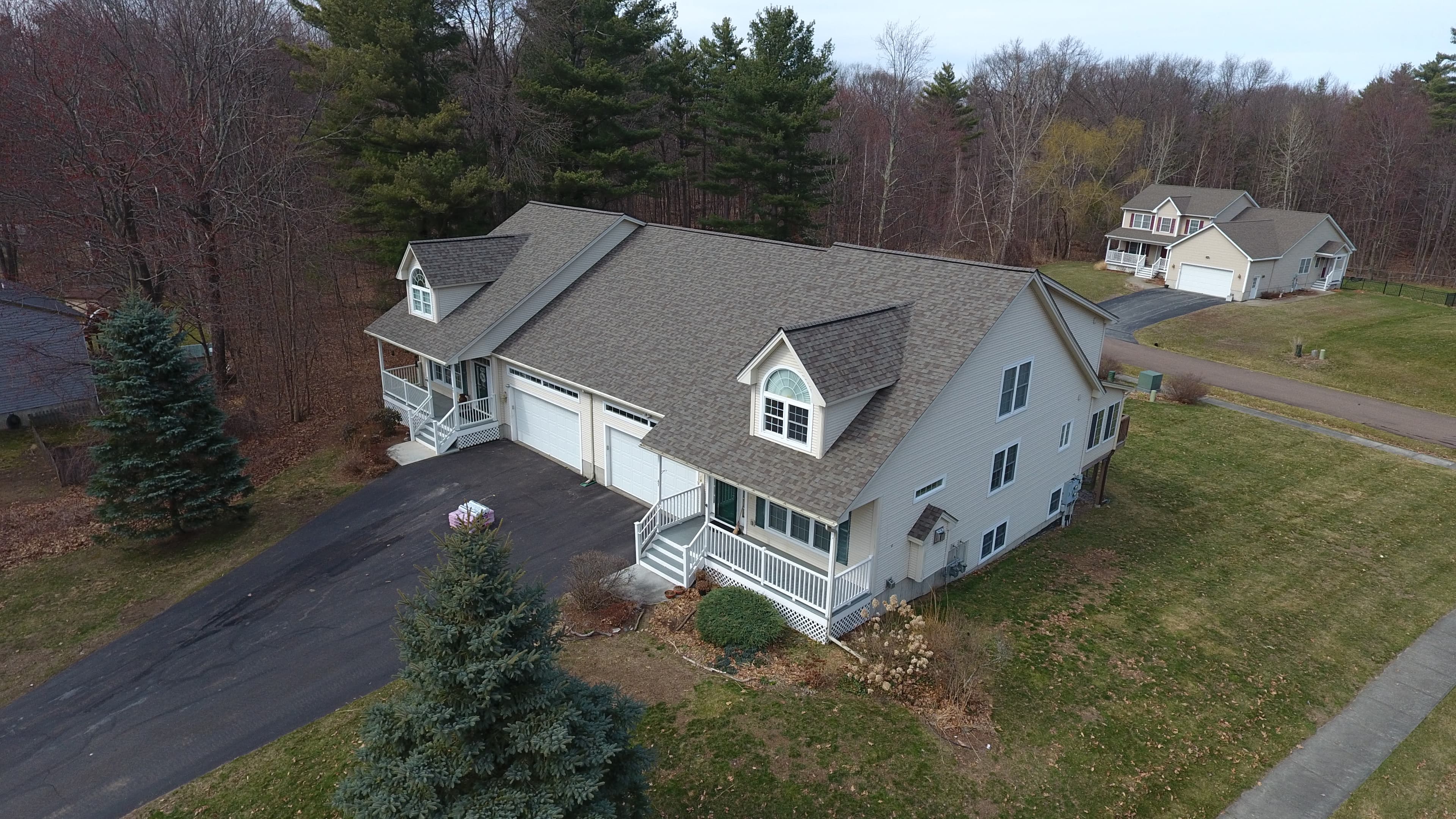
What Vermont Winters Actually Do to Your Roof — And What to Check This April
April in Vermont is a strange month. One day you're watching snow squalls blow across Lake Champlain, and the next you're pulling out the lawn chairs. But while the rest of the world is thinking about spring cleaning, the smarter move for Burlington-area homeowners is to walk outside, look up, and start thinking about what the last four months may have done to your roof.
Vermont winters are genuinely brutal on roofing systems in ways that homeowners in milder climates simply don't deal with. We're talking about repeated freeze-thaw cycles, heavy snow loads, ice damming, wind-driven rain that arrives sideways off the lake, and temperature swings that can go from single digits to 50°F in a matter of days. Every one of those events stresses your roof in a slightly different way. By the time mud season arrives, most roofs have been through the wringer — even the ones that look fine from the driveway.
This post is meant to give you a practical framework for evaluating your roof this spring, understanding what you're looking at, and making smart decisions before small problems become expensive ones.
---
Why a Post-Winter Roof Inspection Matters More in Vermont Than Almost Anywhere Else
The physics of what happens to a Vermont roof each winter are worth understanding. Water expands when it freezes — by about 9%. That doesn't sound like much, but when that expansion is happening inside a small crack in your flashing, inside a seam in your underlayment, or underneath a lifted shingle, it works like a wedge. Each freeze-thaw cycle opens that gap a little wider. Over the course of a Vermont winter, which can deliver 30 or more meaningful freeze-thaw cycles depending on elevation, those gaps add up.
Ice dams are the other major factor. They form when heat escapes through your roof deck and melts the base of the snowpack sitting on your roof. That meltwater runs down toward the eaves, hits the cold overhang where there's no heat loss from below, and refreezes. Over days and weeks, that ice backs up under your shingles and finds any penetration point it can. You often won't see evidence of an ice dam problem until spring, when you notice water staining on a ceiling or attic insulation that's inexplicably damp.
In the greater Burlington area, homes built before 1990 are especially vulnerable because many of them weren't built with the ice-and-water shield underlayment that's now standard practice under Vermont's building codes. If you own an older home in the New North End, on the South End flats, or out in Williston or Shelburne, this is worth paying particular attention to.
---
What to Look for in a Spring Roof Inspection
Start From the Ground
You don't need to climb up on your roof to do a meaningful first pass. Grab a pair of binoculars and walk the perimeter of your house on a clear day. You're looking for:
- Missing or displaced shingles. Heavy wind events — and we had several through January and February — can break the seal strip on asphalt shingles, especially on older roofs. Look for patches where shingles appear lifted, curled, or simply gone.
- Granule loss. If your shingles look lighter or patchier in some spots than others, those areas may be losing their protective granule coating. Check your gutters too — a significant amount of granules at the bottom of downspouts is a sign that your shingles are aging out.
- Sagging areas. Any visible dip or bow in your roof line is a red flag that deserves immediate attention. It can indicate structural damage, saturated decking, or compromised rafters.
- Flashing condition. The metal flashing around your chimney, skylights, and roof penetrations is one of the most common failure points. Look for any areas where it appears lifted, bent, or separated from the surface it's sealing.
Check the Attic First
Before you or anyone else sets foot on your roof, the attic will tell you a lot. On a dry day, go up there with a flashlight and look for:
- Daylight coming through the roof deck (visible holes or gaps)
- Water staining or dark discoloration on the sheathing or rafters
- Frost or moisture on the underside of the decking — a sign of inadequate ventilation
- Soft spots in the decking that flex when you apply pressure
- Mold or mildew, which indicates prolonged moisture exposure
A damp attic after a Vermont winter isn't always the result of a roof failure. Sometimes it's a ventilation problem, which is its own issue worth fixing. But either way, finding it in April means you can address it before it quietly destroys your roof decking over the next few years.
Gutters and Drainage
Gutters that pulled away from the fascia under ice dam weight are extremely common around Chittenden County. Check each section of gutter for proper pitch, secure attachment, and any visible gaps at the seams. Also make sure your downspouts are directing water away from the foundation — especially important as April rain accelerates snowmelt and ground saturation.
---
April Is Also the Right Time to Think About Siding
Spring roof inspections tend to get all the attention, but this is also the moment to assess your siding before the warm-weather renovation season kicks into full gear. Vermont contractors book up fast once May arrives — anyone who's tried to get exterior work done in July knows what we mean.
Walk your exterior and look at the siding with fresh eyes. After a winter of freeze-thaw cycling, you may notice:
- Wood siding that has split, warped, or pulled away from the structure. Paint won't fix this — underlying rot or moisture infiltration needs to be addressed at the source.
- Vinyl siding that has cracked or buckled. Vinyl becomes brittle in extreme cold and is vulnerable to impact. A single bad ice event can crack a section you wouldn't even know to look for.
- Fiber cement boards with paint peeling at the edges or butt joints. This is often a sign that water has wicked in at an exposed edge, which can lead to swelling and failure over time.
- Gaps at corners, trim, or around windows and doors. These are infiltration points for both water and pests, and they tend to open up over the course of a Vermont winter.
Getting ahead of siding repairs in April means your contractor can properly assess and prep the surface while conditions are still dry and cool — often ideal for certain applications — rather than scrambling to fit you in during the summer rush.
---
When to Call a Professional vs. DIY
There's a realistic line between what a capable homeowner can handle and what requires a licensed contractor. Generally speaking:
You can safely handle: cleaning gutters, clearing debris from the roof surface from a ladder (without walking on the roof), caulking minor gaps around window trim or exterior penetrations, and doing the visual assessment described above.
You should call a professional for: anything that requires walking on the roof, replacing or re-sealing flashing, addressing suspected ice dam damage, repairing or replacing sections of roofing material, diagnosing attic moisture or ventilation problems, and any siding work that involves removing and replacing material.
Vermont's pitch requirements and ice-and-water shield standards aren't suggestions — they're built into the residential building code for a reason. Work done incorrectly, even with good intentions, can void manufacturer warranties and create liability issues if you sell the home down the road.
---
A Note on Timing
Early April is often still too wet and cold for most roofing repairs. Asphalt shingles need to be above about 40°F to seal properly, and working on a wet roof creates both safety hazards and adhesion problems. But this month is the ideal window for inspections, planning, and scheduling — so that when the conditions are right in late April and May, your contractor can move forward without delay.
If you've noticed anything concerning after this winter — ceiling stains, ice dams that lingered longer than usual, or gutters that look like they took a beating — reach out to All-Star Contracting at (802) 305-8151. We're a licensed Vermont roofing and siding contractor working throughout the state, and we're happy to walk through what we're seeing on roofs this spring before you commit to any scope of work. You can also learn more about what we do at allstarcontracting.pro.
Protecting your home in Vermont isn't just about comfort — it's about preserving one of the most significant investments most people make in their lifetime. A spring inspection doesn't have to turn into an expensive project. More often than not, it's a straightforward way to catch small problems before they become big ones.
---
Frequently Asked Questions
How often should a Vermont home's roof be inspected?
Twice a year is the standard recommendation — once in the fall before winter sets in, and once in the spring after the freeze-thaw season has ended. Vermont's climate is more demanding than most, so waiting until something visibly fails is a costly approach. Annual spring inspections are especially important for homes over 15 years old or those with known ventilation issues.
What does ice dam damage actually look like inside a home?
The most common signs are water stains or discoloration on ceilings near exterior walls or at the eaves line, peeling paint on interior walls near roof overhangs, damp or compressed attic insulation, and in more serious cases, soft or stained drywall. The tricky part is that ice dam damage often doesn't show up immediately — it may appear weeks or months after the event as moisture works its way through building materials.
Is April too early to start siding repairs in Vermont?
Not necessarily. Certain siding materials, including vinyl and fiber cement, can be installed in cooler temperatures with proper technique. More importantly, April is the right time to assess the extent of any winter damage, order materials, and get on a contractor's schedule before the summer backlog builds. Waiting until June or July often means waiting several more months for available crews.
How do I know if my roof needs full replacement versus repairs?
Several factors point toward replacement over repair: the roof is over 20–25 years old, more than 20–30% of the shingles are damaged or missing, there's widespread granule loss indicating the shingles have aged out of their protective life, the decking shows signs of rot or structural compromise, or repairs have become a recurring annual expense. A licensed contractor can give you a realistic assessment of where your roof sits on that spectrum — and a trustworthy one will tell you honestly if repairs will reasonably extend the life of the system versus patch a problem that's going to resurface.
Frequently Asked Questions
How often should a Vermont home's roof be inspected?
Twice a year is the standard recommendation — once in the fall before winter sets in, and once in the spring after the freeze-thaw season has ended. Vermont's climate is more demanding than most, so waiting until something visibly fails is a costly approach. Annual spring inspections are especially important for homes over 15 years old or those with known ventilation issues.
What does ice dam damage actually look like inside a home?
The most common signs are water stains or discoloration on ceilings near exterior walls or at the eaves line, peeling paint on interior walls near roof overhangs, damp or compressed attic insulation, and in more serious cases, soft or stained drywall. Ice dam damage often doesn't show up immediately — it may appear weeks or months after the event as moisture works its way through building materials.
Is April too early to start siding repairs in Vermont?
Not necessarily. Certain siding materials, including vinyl and fiber cement, can be installed in cooler temperatures with proper technique. More importantly, April is the right time to assess winter damage, order materials, and get on a contractor's schedule before the summer backlog builds. Waiting until June or July often means waiting several more months for available crews.
How do I know if my roof needs full replacement versus repairs?
Several factors point toward replacement over repair: the roof is over 20–25 years old, more than 20–30% of the shingles are damaged or missing, there is widespread granule loss, the decking shows signs of rot or structural compromise, or repairs have become a recurring annual expense. A licensed contractor can give you a realistic assessment — and a trustworthy one will tell you honestly if repairs will reasonably extend the life of the system versus patch a problem that will resurface.
Need Help With Your Roof or Siding?
Schedule a free inspection — we'll assess your property and give you an honest recommendation.