
Storm Damage Roof Repair and Insurance Claims in Vermont: What You Need to Know This Spring
If you made it through another Vermont winter with your roof intact, congratulations — but don't celebrate too quickly. April is when the real damage often reveals itself. The ice dams, wind-driven snow, and freeze-thaw cycles that pounded Chittenden County from November through March have a way of leaving behind problems that only show up once the temperatures climb above freezing and the melt begins in earnest.
Every spring, we get calls from Essex homeowners who noticed a water stain on the ceiling, a section of soffit that pulled away, or shingles scattered across the yard after a March wind event. Some of these are straightforward repairs. Others are legitimate insurance claims that, if handled correctly, can cover most or all of the cost of a roof repair or replacement. But if handled poorly — or left to someone who doesn't understand Vermont's climate, building codes, or how insurers work in this region — a legitimate claim can fall apart or result in an underpaid settlement.
This post is meant to walk you through what actually happens after storm damage, how to document it properly, and what to expect from the insurance claims process in Vermont.
Why Vermont Winters Are So Hard on Roofs
This isn't a generic statement about cold weather. Vermont's climate creates a specific and compounding set of stressors for roofs that most southern or even Midwestern states simply don't experience at the same intensity.
The big culprit is the freeze-thaw cycle. In a typical Chittenden County winter, temperatures may dip below zero for a week, then climb to the low 40s for a few days, then drop again. Every time that happens, any water that's infiltrated your roofing system — even in microscopic amounts — expands and contracts. Over a season, this works apart flashing seams, cracks underlayment, and loosens fasteners. By April, what started as a minor vulnerability can become a genuine leak path.
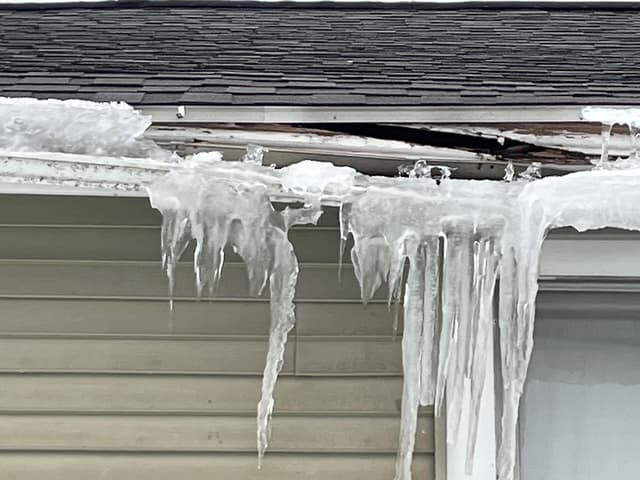
Then there's ice damming, which is practically a rite of passage for Vermont homeowners. When heat escapes through an insufficiently insulated attic, it warms the roof deck, melts snow toward the ridge, and that water refreezes at the cold eaves. The resulting ice dam forces water back up under shingles — water that has nowhere to go except into your roof structure, your insulation, and eventually your ceilings. Essex, South Burlington, Williston, and the surrounding communities see this regularly because of the mix of older homes and our particular snowfall patterns.
Wind damage is the other major factor. Vermont's wind events don't always make the news, but a 45-55 mph gust coming off Lake Champlain or down from the Green Mountains can lift tab shingles, peel back ridge caps, and tear off sections of metal flashing. This damage is often localized and easy to miss from the ground.
How to Assess Your Roof After Winter — Without Putting Yourself at Risk
A ground-level inspection is a reasonable first step. Walk the perimeter of your house and look for:
- Shingles in your yard or gutters
- Visible missing or curling shingles on the roof surface
- Sagging or damaged gutters
- Granules (the small mineral coating on asphalt shingles) collecting in downspout drainage areas — this indicates accelerated shingle wear
- Bent, separated, or missing flashing around chimneys, skylights, or plumbing vents
- Damage to soffits or fascia boards
Inside your home, check your attic in daylight with the lights off. If you see any pinpoints of light coming through the roof deck, that's a problem. Also look for dark staining, soft spots, or any sign of moisture intrusion on the decking or rafters. Check ceilings in upper-floor rooms, especially near exterior walls and around any penetrations.
Do not get on your roof if there's any remaining ice, if the pitch is steep, or if you're not experienced working at height. The number of injuries that happen on Vermont roofs in April because people are eager to assess winter damage is significant. A licensed contractor with proper safety equipment is the right person for any close-up inspection.
Understanding Storm Damage vs. Normal Wear and Tear
This distinction matters enormously for insurance purposes, and it's where a lot of homeowners get tripped up.
Insurance policies cover sudden, accidental loss — not gradual deterioration. A 20-year-old roof that's simply reaching the end of its service life will not be covered, even if it starts leaking after a storm. But the same storm that leaves your neighbor's newer roof untouched can cause legitimate damage to a 12-year-old roof that was still in serviceable condition. The insurance company's job is to determine which category your damage falls into. Your job — and your contractor's job — is to accurately document what happened and when.
This is one area where having a contractor who understands Vermont's weather history is genuinely useful. We can look at regional weather data, reference known storm events that affected the greater Burlington area, and help you establish a timeline that supports a legitimate claim. That kind of supporting documentation can make a meaningful difference in how your claim is evaluated.
Filing a Storm Damage Claim in Vermont: A Practical Walkthrough
Step 1: Document Everything Before Any Repairs
Photograph and video the damage thoroughly before a single shingle is touched. Get photos from multiple angles, include close-ups of specific damage, and capture any interior water damage alongside the exterior conditions. Date-stamped photos are valuable. This documentation is the foundation of your claim.
Step 2: Call Your Insurance Company Promptly
Vermont homeowner policies typically require you to report damage within a reasonable timeframe. Don't sit on it for weeks. When you call, request a claim number and ask specifically about the inspection process — whether they'll send an adjuster, use a third-party inspection service, or ask you to provide contractor estimates.
Step 3: Get a Professional Inspection Before the Adjuster Visit
Having a licensed roofing contractor inspect the damage before or during the adjuster's visit is one of the most underutilized steps in this process. A knowledgeable contractor can identify damage that a general insurance adjuster may miss — not because adjusters are incompetent, but because roofing is a specialty. Subtle ice dam damage to underlayment, compromised flashing that's technically intact but no longer watertight, and blow-off damage on low-slope sections are all things that benefit from an expert eye.
Step 4: Understand Your Estimate and Policy Coverage
Most Vermont homeowner policies cover roof damage on either a replacement cost value (RCV) or actual cash value (ACV) basis. RCV pays for a comparable new roof minus your deductible. ACV depreciates the payout based on the age and condition of your existing roof, which can significantly reduce what you receive. Knowing which coverage you have going into the claim process helps you set realistic expectations.
Also pay attention to code upgrade provisions. Vermont building codes have evolved over the years, and if your roof was installed under older code requirements, you may be entitled to a code upgrade allowance in your claim — for instance, updated ice-and-water shield requirements along eaves and valleys, which are particularly relevant given our climate.
Step 5: Get Written Estimates from Licensed Vermont Contractors
Your insurer will likely require at least one written estimate. In Vermont, roofing contractors should be licensed through the Vermont Department of Labor. Confirm licensure before signing anything. Be cautious of out-of-state contractors who appear after major storm events — they're common, they're often operating without Vermont licensure, and they typically lack any accountability to the local community once the job is done.
Spring Siding: Don't Overlook the Walls
April is also when we start full siding assessments. Vermont winters are hard on siding for the same reasons they're hard on roofs — moisture infiltration, freeze-thaw movement, and wind-driven impact. Fiber cement, vinyl, wood, and engineered wood siding products all respond differently to our climate, and spring is the right time to identify and address any issues before they allow water to penetrate your wall assembly.
For homes in the greater Burlington area and communities like Essex Junction, Hinesburg, and Richmond, siding condition is directly tied to long-term property value. Damaged or deteriorating siding isn't just cosmetic — it's a moisture management failure waiting to happen. A spring inspection that catches a few compromised seams or impact-damaged sections can prevent a much larger repair down the road.
Working With a Contractor Who Knows Vermont
The most consistent feedback we hear from homeowners who've gone through the insurance claims process is that having a local contractor who knows the process makes it less stressful and usually results in a better outcome. That's not a sales pitch — it's just practical. Someone who understands Vermont building codes, knows the regional weather patterns, and has done this work across Chittenden County is going to advocate more effectively on your behalf than someone working from a generic estimate template.
If you're dealing with winter storm damage to your roof or siding — or if you're just not sure what condition your roof is in heading into spring — All-Star Contracting is a licensed Vermont roofing and siding contractor serving Essex and the surrounding region. We do honest assessments and help homeowners understand what they're looking at before any decisions are made. Give us a call at (802) 305-8151 or visit allstarcontracting.pro to get started.
Frequently Asked Questions
Does homeowner's insurance cover ice dam damage in Vermont?
In most cases, yes — if the ice dam caused sudden and accidental water damage to your roof structure or interior. Vermont homeowner policies typically cover the resulting damage from ice dams, though gradual deterioration or pre-existing conditions may not be covered. Document all damage thoroughly and contact your insurer promptly to report the claim.
How do I know if my roof damage is covered by insurance or considered normal wear and tear?
Insurance covers sudden, storm-related damage — not a roof that has simply aged out. If your roof was in reasonable condition before a specific wind, hail, or ice event, the damage from that event is likely claimable. A licensed Vermont roofing contractor can inspect your roof and help document the damage in relation to a specific weather event, which strengthens your claim.
Should I get a contractor inspection before the insurance adjuster visits?
Yes, and it's one of the most useful steps you can take. A roofing contractor can identify damage that general adjusters may miss — particularly subtle ice dam damage, compromised flashing, or underlayment issues. Having a contractor present during or before the adjuster's visit ensures the full scope of damage is accurately assessed.
What should I look for when hiring a roofing contractor in Vermont for an insurance repair?
Confirm that the contractor is licensed through the Vermont Department of Labor and has experience working with insurance claims in the state. Be cautious of out-of-state contractors who arrive after storm events — they often lack Vermont licensure and local accountability. Ask for written estimates, verify insurance coverage, and check references from local Vermont homeowners.
Need Help With Your Roof or Siding?
Schedule a free inspection — we'll assess your property and give you an honest recommendation.