# How to Choose the Right Roof Shingle Color for Your Vermont Home
Your roof is roughly 40% of what people see when they look at your house. That's a lot of visual real estate riding on one decision — and it's a decision you'll live with for 20 to 25 years. Pick the wrong shingle color and you'll notice it every time you pull into the driveway.
The good news: you're not stuck with black or dark gray anymore. Twenty years ago, those were basically your options. Today's asphalt shingles come in dozens of colors and blends — from classic charcoal to warm browns, deep blues, mossy greens, and designer multi-tone options that look nothing like the flat, uniform shingles of the past.
Here's how to narrow it down and pick a color you'll actually be happy with for the next two decades.
---
1. Go Look at Actual Roofs Before You Decide Anything
This is the single most useful thing you can do, and most people skip it. Drive around your town. Look at roofs on houses that are similar to yours — same general style, similar siding color, similar era of construction.
Pay attention to what catches your eye. What looks sharp? What looks dated? What blends well with the neighborhood without being invisible?
Once you've narrowed your preferences, get physical samples from your contractor. Not digital swatches on a website — actual shingle samples. Hold them against your siding, your trim, your front door. Do this at different times of day, because shingle colors shift dramatically between morning light, midday sun, and overcast skies. A charcoal that looks sleek at noon can look flat and lifeless on a cloudy Vermont afternoon.
---
2. You Don't Have to Match What You Had Before
If you're replacing an existing roof, there's no rule that says you need to pick the same color again. In fact, a new shingle color is one of the easiest ways to modernize a home's look without touching anything else.
That said, make sure your new color works with your existing siding, stone, brick, or trim. You're not repainting the whole house — you're working with what's already there.
---
3. Consider Designer and Multi-Tone Shingles
If you haven't looked at roofing products recently, the designer lines will surprise you. Manufacturers like Owens Corning and CertainTeed now offer shingles with layered, multi-dimensional color blends that create genuine depth and texture on the roof.
Some popular designer options that work well on Vermont homes:
- Aged Copper — warm brown-copper tones that complement natural wood and stone
- Driftwood — a soft gray-brown blend that works with almost any siding color
- Pacific Wave — blue-gray tones that pair well with white or light gray exteriors
- Sand Dune — warm tan blend, excellent on farmhouse and colonial styles
- Sedona Canyon — rich red-brown, strong with earth-tone exteriors
---
4. Your Roof Color Directly Affects Home Value
This isn't just aesthetics — it's money. Studies consistently show that a color-coordinated exterior increases perceived home value. Real estate professionals and appraisers notice when a roof color clashes with the rest of the house, and they notice when it works.
Your roof is the single largest exterior surface. Getting the color right has an outsized impact on curb appeal compared to almost any other exterior decision.
If you're planning to sell within the next 5–10 years, lean toward universally appealing colors — charcoal, weathered wood tones, slate gray. Bold or unusual colors can polarize buyers.
---
5. Think About Vermont's Climate and Light
Vermont's climate should factor into your color decision more than most homeowners realize.
Lighter shingles reflect more heat. In southern states, this matters a lot for cooling costs. In Vermont, the difference is marginal since we're heating more than cooling — but lighter colors do help keep attics cooler in July and August, which can extend shingle life and reduce ice dam risk by keeping attic temperatures more consistent.
Vermont's overcast skies affect how colors read. We get a lot of gray days, especially from November through April. Colors that look warm and rich in full sun can look muddy or flat under overcast skies. This is another reason to test samples against your house on a cloudy day, not just a sunny one.
Algae-resistant shingles open up lighter options. Older light-colored shingles were notorious for developing dark algae streaks within a few years. Modern shingles with copper or zinc granules resist this effectively, making lighter colors practical even in Vermont's humid climate.
---
6. Match Your Shingle Color to Your Exterior Materials
Different exterior materials call for different shingle approaches:
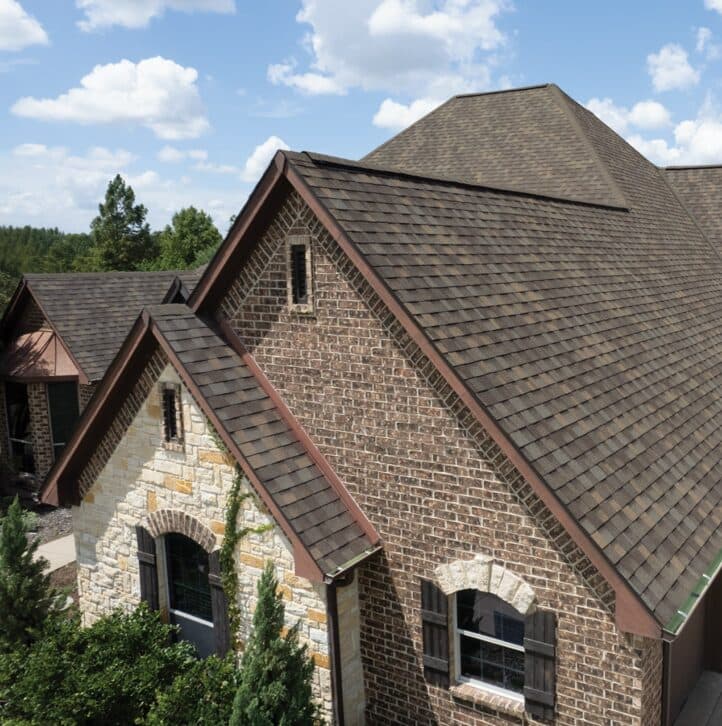
Brick homes: Dark shingles almost always work — black, dark brown, charcoal gray. The contrast between warm brick tones and a dark roof creates a classic, grounded look. Avoid shingle colors that compete with the brick's own color range.
Vinyl or painted siding: You have more flexibility here. Multi-dimensional shingles work especially well because the siding provides a clean, uniform backdrop. Match the undertone — if your siding has warm undertones, go warm with the shingles. Cool siding pairs best with cool-toned shingles.
Natural wood or cedar: Earth tones and warm browns complement natural wood beautifully. Avoid anything too cool or too dark — you want the roof and the wood to feel like they belong together.
Stone or mixed materials: Stone exteriors often have multiple colors in them. Pull a shingle color from the secondary or accent color in the stone, not the dominant one. This creates cohesion without being too matchy.
---
7. Work With Your Home's Architectural Style
Certain roof colors just look right on certain house styles. You're not locked into these, but they're reliable starting points:
Colonial, Victorian, Cape Cod: Dark gray, black, or deep brown. These traditional styles look best with classic, understated roof colors.
Farmhouse: Warm browns, weathered wood tones, muted greens. The roof should feel like it belongs in the landscape.
Craftsman or Bungalow: Earth tones — brown, tan, olive. These homes were designed to harmonize with their surroundings.
Modern or Contemporary: Black, dark charcoal, or standing-seam metal in dark tones. Clean lines call for clean, bold color choices.
Ranch: Almost anything works on a ranch, but the low roofline means the shingle color is very visible. Multi-tone architectural shingles add interest to the long, unbroken roof planes typical of ranch homes.
The general rule: select a shingle color that complements your exterior but still provides some contrast. A brown roof on a brown house disappears. A charcoal roof on a brown house frames it.
---
A Few Combinations That Always Work
If you're overwhelmed by choices, these pairings are reliable:
- White or light gray siding → Charcoal, black, or slate blue shingles
- Cream or beige siding → Weathered wood, driftwood, or brown-blend shingles
- Blue or blue-gray siding → Dark gray or black shingles
- Red brick → Charcoal, dark brown, or black shingles
- Natural wood → Warm brown or cedar-tone shingles
- Dark green siding → Charcoal, weathered wood, or brown shingles
---
The Best Way to Decide
Here's what we tell every homeowner who's struggling with this decision:
1. Drive around and find 2–3 roofs you like on similar homes 2. Ask your contractor to identify the shingle brand and color 3. Get physical samples and hold them against your house 4. Look at them in sun, shade, and overcast light 5. Sleep on it — you'll live with this choice for 20+ years
Your contractor should be willing to help you through this process. At All-Star Contracting, we bring samples to every roof consultation and we'll give you an honest opinion about what works with your specific home. We've installed enough roofs across Vermont to know what looks good and what homeowners end up regretting.
If you're planning a roof replacement this season, give us a call at (802) 305-8151 or visit [allstarcontracting.pro](https://www.allstarcontracting.pro) to schedule a free inspection. We'll walk the roof, assess the condition, and help you pick a shingle color you'll be happy with for decades.
---
Frequently Asked Questions
Does roof shingle color affect energy efficiency?
In Vermont, the impact is modest compared to southern climates, but lighter shingles do reflect more solar heat. This keeps attics cooler in summer, which can reduce cooling costs slightly and help maintain more consistent attic temperatures year-round. More consistent attic temps also reduce ice dam risk in winter by preventing uneven snowmelt on the roof surface.
What's the most popular shingle color in Vermont?
Charcoal and weathered wood tones are the most common choices on Vermont homes. Charcoal is the safest pick — it works with virtually any exterior color, looks good in all light conditions, and ages well. Weathered wood blends are popular on farmhouse and colonial styles, especially in rural areas.
Should I choose a light or dark shingle color?
Both work well in Vermont. Dark shingles (charcoal, black, dark brown) are classic and hide algae streaks better on older products. Light shingles (driftwood, sand, slate) can modernize a home's look and are now available with algae-resistant technology. The best choice depends on your siding color, architectural style, and personal preference rather than climate alone.
How do I know if a shingle color will look good on my house?
Get physical samples from your contractor and hold them against your exterior at different times of day. Digital renderings and website swatches are a starting point, but real samples in real light are the only reliable way to evaluate color. Pay special attention to how the color looks on overcast days — Vermont has a lot of them, and some shingle colors look dramatically different without direct sun.
Frequently Asked Questions
Does roof shingle color affect energy efficiency?
In Vermont, the impact is modest compared to southern climates, but lighter shingles do reflect more solar heat. This keeps attics cooler in summer, which can reduce cooling costs slightly and help maintain more consistent attic temperatures year-round. More consistent attic temps also reduce ice dam risk in winter by preventing uneven snowmelt on the roof surface.
What's the most popular shingle color in Vermont?
Charcoal and weathered wood tones are the most common choices on Vermont homes. Charcoal is the safest pick — it works with virtually any exterior color, looks good in all light conditions, and ages well. Weathered wood blends are popular on farmhouse and colonial styles, especially in rural areas.
Should I choose a light or dark shingle color?
Both work well in Vermont. Dark shingles (charcoal, black, dark brown) are classic and hide algae streaks better on older products. Light shingles (driftwood, sand, slate) can modernize a home's look and are now available with algae-resistant technology. The best choice depends on your siding color, architectural style, and personal preference rather than climate alone.
How do I know if a shingle color will look good on my house?
Get physical samples from your contractor and hold them against your exterior at different times of day. Digital renderings and website swatches are a starting point, but real samples in real light are the only reliable way to evaluate color. Pay special attention to how the color looks on overcast days — Vermont has a lot of them, and some shingle colors look dramatically different without direct sun.
Need Help With Your Roof or Siding?
Schedule a free inspection — we'll assess your property and give you an honest recommendation.